
Solar Farm Maintenance in Georgia: What Red Clay, Heat, and a Long Growing Season Demand
Solar farms in the Southeast share a lot with solar farms everywhere else: panels, racking, inverters, and a field that needs looking after. But the field itself behaves differently depending on where you are. A site in Georgia faces a particular mix of climate and soil, and an O&M program that ignores it tends to fall behind.
Good solar farm maintenance in Georgia starts with three local facts: the growing season is long, the rain can be heavy, and much of the soil is red clay.
A Growing Season That Does Not Quit
In parts of the country with a short season, vegetation has a quiet period when mowing can pause. In Georgia that quiet period is short. Warm, humid weather keeps ground cover growing for much of the year, and a site that is mowed on a calendar built for a cooler climate can slip behind quickly.
The practical result is that vegetation management in Georgia is less about a handful of big cuts and more about steady control. Sites do well with a plan that expects fast regrowth, adjusts frequency by season, and pays extra attention to equipment, fence lines, and access roads. Our post on integrated vegetation management covers how to do this without simply mowing more often. And because growth that dries out becomes fuel, it ties into the fire-risk planning we covered in solar farm fire risk.
Red Clay and Erosion
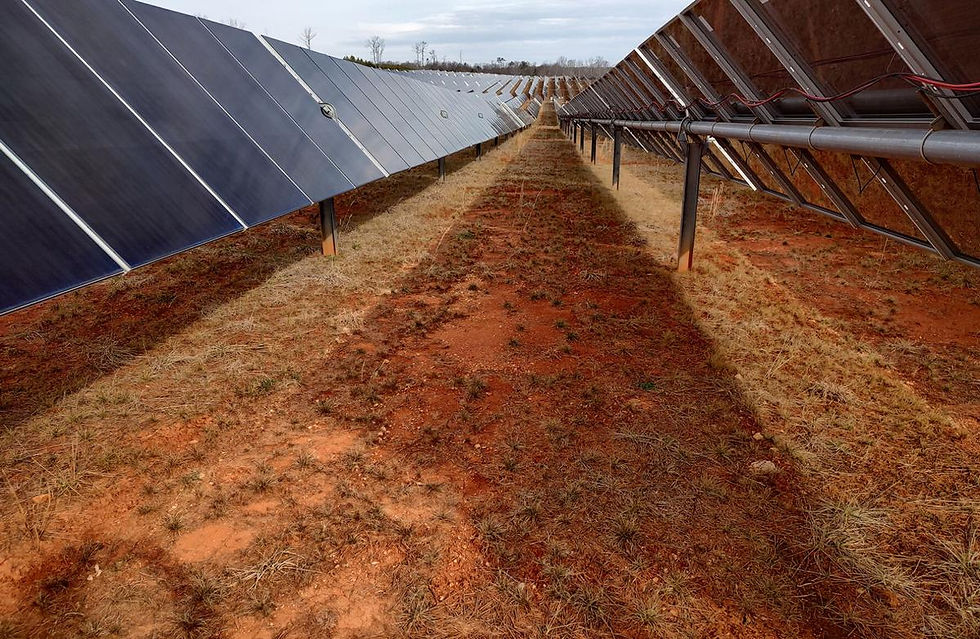
Much of Georgia's Piedmont is known for red clay soil. Clay holds up fine when it is covered by vegetation, but once it is exposed, it can erode quickly, especially on slopes and in drainage paths. Construction disturbs the ground, and a young site that has not fully stabilized is the most exposed.
That is why civil work belongs in a Georgia maintenance plan from the start, not only after a washout. Useful practice includes:
Watching drainage paths and culverts after every significant rain, because clogged or undercut drainage is where problems start.
Re-establishing ground cover on any bare patch before the next heavy rain, since vegetation is the cheapest erosion control there is.
Repairing small channels early. A rill that is filled and stabilized in a day can become a gully that needs real grading work if it is left through several storms.
Keeping access roads graded and draining, so that water does not run down the road itself.
Our earlier post on solar farm erosion repair goes deeper on why this is the O&M problem many contractors are not equipped to handle.
Heat, Humidity, and Electrical Equipment
Long, hot summers and high humidity are hard on electrical equipment. Heat accelerates wear on connections and components, and humidity adds the risk of moisture and corrosion inside enclosures. None of this means equipment fails more often in Georgia as a rule. It means routine inspection matters, and that problems tend to show up in the hottest months, when production is highest and downtime costs the most.
Two habits help. First, schedule the thorough electrical inspection work for the cooler months, when taking sections offline costs less production. Second, use thermal imaging to catch connections that are running hot before they fail.
Storm Season Matters in the Southeast
Heavy thunderstorms are common in Georgia summers, and tropical systems can bring wind and heavy rain to parts of the state late in the season. That puts a premium on being able to reach a site quickly afterward. Damage that is assessed within days is usually a routine repair, while the same damage left for weeks tends to grow. A crew that already knows the site can assess vegetation, drainage, and electrical condition in one visit.
A Year on a Georgia Site
Putting those conditions together, a Georgia O&M calendar tends to look different from one built for a cooler climate.
Spring and early summer
This is when growth takes off. The priority is getting vegetation under control before it reaches the equipment, and confirming that drainage is clear ahead of the wetter months. Any bare ground left from winter work should be seeded or covered now.
Mid to late summer
Heat and heavy rain arrive together. Crews should keep up with regrowth, check drainage after significant storms, and watch for hot connections on the electrical side. This is the hardest season to take equipment offline, so only urgent electrical work belongs here.
Fall and winter
Growth slows and production eases, which makes this the best window for the thorough work: complete electrical inspections, torque checks, thermal scans, and any civil repairs that need dry ground. It is also the time to reset vegetation before the dry-down creates fire risk.
The point is not that Georgia needs more maintenance than other states. It is that the work needs to be timed to the conditions, and a plan copied from somewhere with a different climate will miss the moments that matter.
What to Ask a Maintenance Partner in Georgia
How does your vegetation schedule change across the year, not just in summer?
What is your process for drainage and erosion checks after heavy rain?
Can one crew handle vegetation, civil, and electrical work, or will I be coordinating several vendors?
How quickly can you mobilize after a major storm?
Revision Solar provides vegetation control, civil work, electrical services, and solar panel washing for utility-scale solar sites in Georgia and across NC, VA, SC, MD, and the East Coast. Get in touch to talk about your site.
Plan for the Conditions, Not the Calendar
The sites that stay in good shape in Georgia are usually the ones whose plans were written around local conditions: steady vegetation control, early attention to erosion, and inspection work timed around the heat. If your site's current plan was built around somewhere else, it is worth a second look. Explore our full range of services or contact our team to start the conversation.


Comments