
Why You Shouldn't Kill All the Grass on Solar Farms: The Hidden Costs of Bare Ground
When faced with the ongoing challenge of vegetation management across utility-scale solar farms, some asset managers and O&M directors consider what seems like a simple solution: eliminate all vegetation permanently. If grass and weeds are the problem, why not just kill everything and maintain bare ground year-round?
It's a tempting idea that appears to offer long-term cost savings and eliminate the need for ongoing vegetation control. But creating vegetation-free solar sites introduces far more serious problems than it solves—problems that cost tens of thousands of dollars to remediate and can persist for years after the initial mistake.
Whether you're managing a 50-acre site or a 1,000-acre solar farm, understanding why beneficial groundcover is essential to site health will protect your investment and prevent costly environmental violations down the road.

The Appeal of Vegetation-Free Solar Farms
The logic seems straightforward: vegetation management is expensive and time-consuming, so eliminating all plant growth permanently would reduce ongoing maintenance costs. Some contractors even promote "vegetation-free solutions" using residual herbicides, landscape fabric, or repeated chemical treatments designed to prevent anything from growing.
On the surface, this approach promises:
No need for seasonal mowing or weed eating
Reduced contractor costs year after year
Clean, maintenance-free areas around equipment
Elimination of fire fuel load concerns
But the reality is very different. Bare ground solar sites create cascading problems that far exceed any short-term maintenance savings.
The Critical Problems with Vegetation-Free Solar Farms
Erosion and Sediment Control Failures
Vegetation—particularly deep-rooted native grasses and groundcovers—is your primary defense against soil erosion. Plant roots stabilize soil, slow water runoff during storms, and prevent sediment from washing across the site and into drainage features, roadways, and nearby waterways.
When all vegetation is killed off, rain hits bare soil directly, dislodging particles and creating runoff that carries sediment downslope. On solar farms with even modest terrain changes, this erosion quickly becomes severe:
Gullies form along access roads and between panel rows, making maintenance vehicle access difficult and expensive to repair
Sediment clogs drainage systems, culverts, and detention basins, causing flooding during heavy rains
Soil washes onto panels, reducing energy production and requiring costly cleaning operations
Waterways downstream receive sediment loads, triggering environmental violations and potential EPA enforcement
Fixing erosion damage after the fact requires expensive remediation: importing fill material, regrading damaged areas, installing erosion control structures, and re-vegetating with appropriate seed mixes. These repairs often cost $20,000–$50,000+ per site and take multiple growing seasons to fully stabilize.
Dust Generation and Air Quality Issues
Bare soil doesn't just erode when it rains—it becomes airborne dust during dry, windy conditions. Solar farms with vegetation-free management strategies generate massive dust clouds that:
Coat solar panels with fine particulate matter, reducing energy output by 5–20% until cleaned
Create visibility hazards on adjacent roads, raising liability concerns
Affect nearby residents and property owners, generating complaints and damaging community relations
Violate air quality permits in regions with dust control requirements
The more frequently you clean panels to remove dust, the more you spend on operations—completely negating any vegetation management savings. Sites in arid regions are particularly vulnerable, where wind-driven dust from bare ground can require weekly or bi-weekly panel cleaning instead of quarterly maintenance.
Extreme Soil Temperature Fluctuations
Vegetative cover moderates soil temperatures by providing shade and retaining moisture. Bare ground exposed to direct sunlight reaches extreme temperatures—often 30–50°F hotter than vegetated areas during summer months.
These temperature extremes:
Damage soil biology, killing beneficial microorganisms that support long-term soil health
Increase evaporation rates, making it harder to re-establish vegetation later if needed
Affect equipment performance, as ground-mounted components experience more extreme thermal cycling
Create inhospitable conditions for any future re-vegetation efforts, requiring soil amendment and multiple growing seasons to recover
Bare, compacted soil that's been chemically sterilized for years becomes degraded to the point where standard seed mixes won't establish without significant investment in soil restoration.

Stormwater Permit Violations and Environmental Compliance Issues
Most utility-scale solar farms operate under stormwater management permits that require vegetation coverage to prevent erosion and sediment discharge. These permits—typically NPDES or state-level stormwater regulations—specify minimum groundcover percentages and prohibit activities that cause erosion or sediment pollution.
Intentionally maintaining bare ground violates these permits. When inspectors visit sites with obvious erosion, sediment-laden runoff, or vegetation-free areas, they issue:
Notices of violation (NOVs) requiring immediate corrective action
Fines ranging from $5,000 to $50,000+ per violation per day until corrected
Mandatory remediation plans including re-vegetation, erosion control installation, and ongoing monitoring
Increased inspection frequency, creating ongoing compliance burdens
Even if your site wasn't originally permitted with specific vegetation requirements, creating erosion problems through poor management triggers enforcement action regardless.
Loss of Pollinator Habitat and Environmental Commitments
Many solar farms—particularly those on agricultural land or in states with pollinator-friendly solar programs—have environmental commitments to establish and maintain beneficial vegetation. These commitments may be:
Required by permits as environmental mitigation measures
Part of landowner lease agreements specifying pollinator habitat or native vegetation
Necessary for incentive programs like Minnesota's pollinator-friendly solar designation
Expected by local communities who supported project development based on environmental benefits
Killing all vegetation destroys these environmental benefits and can:
Violate permit conditions requiring habitat establishment
Breach landowner agreements specifying vegetation management approaches
Disqualify sites from incentive programs worth thousands of dollars annually
Damage community relations when promised environmental benefits aren't delivered
Re-establishing native vegetation or pollinator habitat after years of chemical sterilization requires extensive soil remediation, multiple growing seasons, and significant investment—often more than the entire original vegetation management budget.
Increased Long-Term Maintenance Costs
The promise of "vegetation-free = maintenance-free" rarely holds true. Bare ground sites still require ongoing management:
Repeated herbicide applications to prevent any vegetation from establishing (often quarterly or more)
Dust suppression through watering or chemical dust control products
Erosion repair as gullies and sediment problems develop
Panel cleaning to remove dust accumulation
Drainage maintenance to clear sediment from culverts and detention basins
When you add up these costs over a 25–30 year solar farm lifespan, maintaining bare ground often costs significantly more than establishing beneficial groundcover and managing it properly.
Invasive Species Takeover
Nature abhors a vacuum. When you attempt to maintain completely bare ground, you're fighting constant pressure from plant species trying to colonize the area. The plants that succeed in these harsh, disturbed conditions are typically the most aggressive, hard-to-control invasive species.
Once invasive weeds like Canadian thistle, bindweed, kochia, or cheatgrass establish on bare ground, they:
Spread rapidly across the entire site, as there's no competing vegetation to slow them
Require intensive control efforts including repeated herbicide applications or mechanical removal
Create fire fuel loads far more dangerous than managed native grasses
Damage infrastructure by growing into fences, foundations, and equipment
Controlling invasive species that have taken over a previously bare-ground site is far more expensive than managing beneficial vegetation from the start.
Reduced Property Value and Asset Quality
Solar farms are long-term investments that may be sold, refinanced, or transferred to new owners over their operational lifespan. Sites with obvious erosion problems, environmental violations, dust issues, and vegetation management failures send clear signals about poor overall management.
When potential buyers or lenders evaluate solar assets, they consider:
Outstanding environmental violations or permit compliance issues
Deferred maintenance problems like erosion damage requiring expensive repairs
Ongoing operational costs higher than industry standards due to dust control, panel cleaning, and remediation
Community relations issues from dust complaints, erosion affecting neighbors, or broken environmental commitments
These factors reduce asset value and can complicate transactions or refinancing efforts.
The Right Approach: Strategic Vegetation Management
The goal isn't to eliminate all vegetation—it's to maintain the right vegetation in the right places. A well-designed vegetation management strategy establishes beneficial groundcover that:
Prevents erosion through deep root systems that stabilize soil
Suppresses weeds by outcompeting invasive species for space and resources
Reduces dust by maintaining continuous ground coverage
Supports environmental commitments through pollinator habitat or native species
Minimizes maintenance by establishing low-growing, stable plant communities
This approach combines:
Strategic mechanical control in areas requiring low vegetation around equipment and access routes Targeted spot herbicide treatment only where necessary, avoiding broadcast spraying Beneficial groundcover establishment using native seed mixes or low-maintenance grasses suited to site conditions Selective management that preserves desirable vegetation while controlling problem species
The result is a solar farm that's easier to manage long-term, remains in environmental compliance, and avoids the expensive problems created by bare ground approaches.
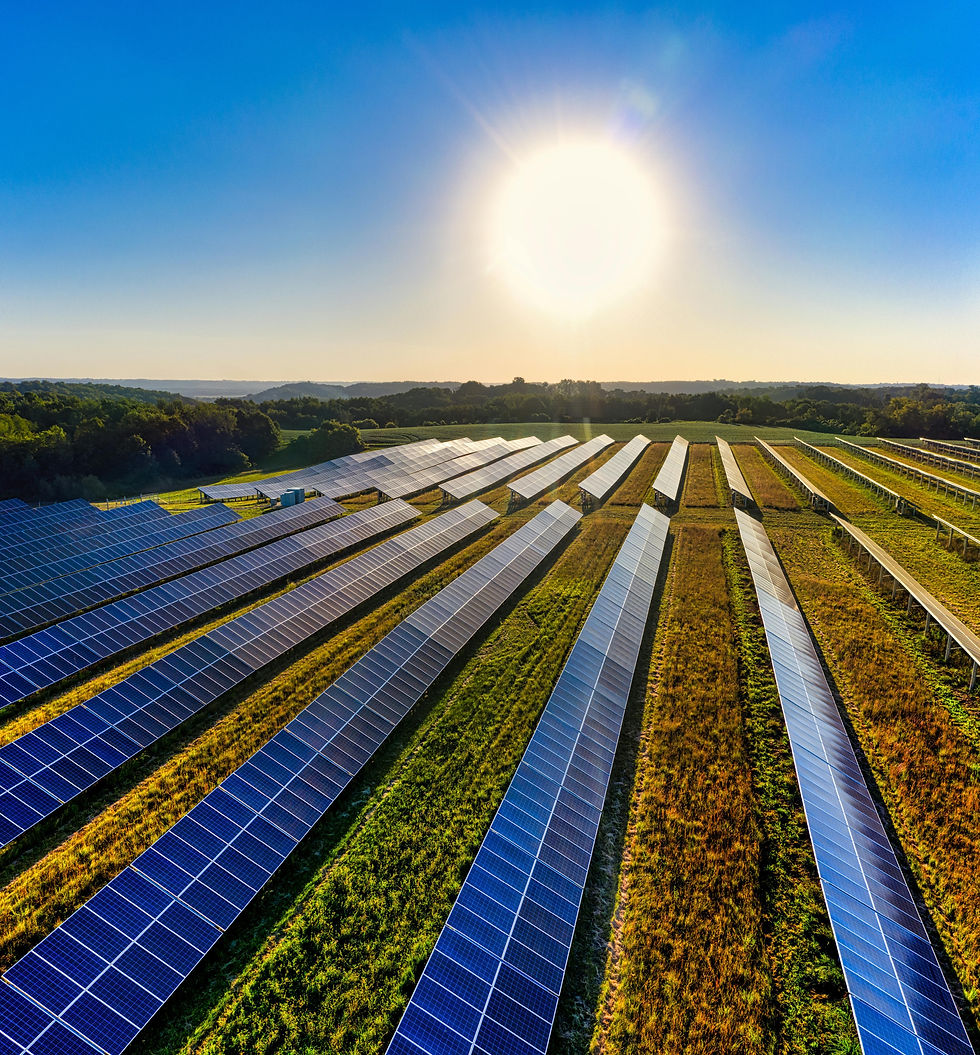
What Beneficial Vegetation Provides
When properly managed, vegetation on solar farms delivers multiple benefits:
Erosion Control: Deep-rooted grasses and forbs prevent soil loss and protect water quality Dust Suppression:Continuous ground coverage eliminates airborne dust problems Stormwater Management: Vegetation slows runoff and allows water infiltration Pollinator Habitat: Flowering native species support beneficial insects and meet environmental commitments Soil Health: Living roots and organic matter maintain soil biology and fertility Temperature Moderation:Vegetative cover reduces extreme temperature fluctuations Weed Suppression: Dense beneficial groundcover prevents invasive species establishment Reduced Maintenance: Stable plant communities require less intervention than bare ground
The Bottom Line: Vegetation is an Asset, Not a Problem
The question isn't whether to have vegetation on your solar farm—it's what kind of vegetation to establish and how to manage it effectively. Attempting to maintain bare ground creates expensive, ongoing problems that undermine site performance, violate environmental permits, and reduce long-term asset value.
Before choosing a contractor who promises vegetation-free solutions or the lowest maintenance costs through aggressive herbicide use, consider what those approaches will cost you over the 25–30 year life of your solar farm. Erosion remediation, environmental violations, dust control, and invasive species management add up to far more than the cost of proper vegetation management from the start.
Revision Solar's Vegetation-Conscious Approach
At Revision Solar, we understand that vegetation is essential to long-term solar farm health. Our management approach establishes and maintains beneficial groundcover that prevents erosion, suppresses weeds, and supports environmental commitments—while keeping vegetation low around critical infrastructure and access routes.
We specialize in vegetation control for utility-scale solar farms up to 1,000 acres, using mechanical methods and targeted herbicide treatments that protect beneficial vegetation while managing problem areas effectively.
If you're managing a solar farm and want vegetation control that protects your investment, maintains compliance, and supports long-term site health, contact Revision Solar to discuss a customized plan for your project.


Comments